
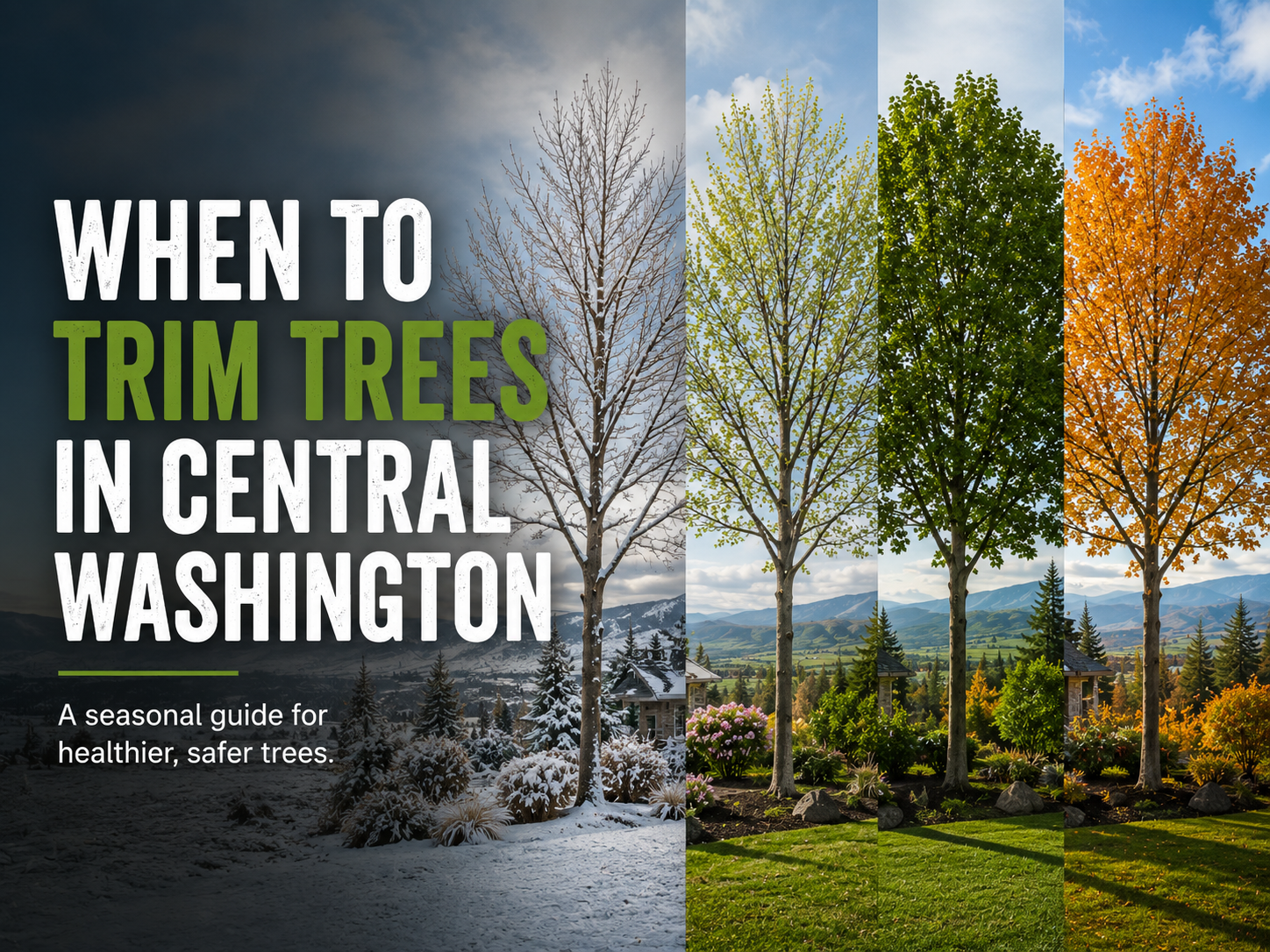
When to Trim Trees in Central Washington: A Seasonal Guide
Pruning at the right time of year isn't just a nice-to-have — for the conifers and deciduous hardwoods common across the Pacific Northwest, timing affects how well a tree heals, how much stress it experiences, and whether you're accidentally inviting pests or disease in. The PNW spans two distinct climates split by the Cascades — the wetter, milder west side and the drier, more continental east side where Central Washington sits — so exact timing can shift a couple of weeks depending on where you are, but the principles below hold true across the region (and most of the temperate U.S.).
Late Winter (February–March) This is the best window for most deciduous trees in our area. The trees are dormant, there are no leaves in the way to hide structural problems, and cuts made now will seal up fast once spring growth starts. East of the Cascades, where winters run colder and drier, this window often opens a couple weeks later than on the wetter west side. This is our busiest pruning season for a reason.
Spring (April–May) Generally a season to avoid major pruning. Trees are pushing new growth and using a lot of stored energy — heavy cuts now can set a tree back for the whole season, especially for fast-growing PNW natives like bigleaf maple and red alder. Light shaping and removing storm damage is fine; save the bigger structural work for next winter.
Summer (June–August) A good time for selective deadwood removal and view clearing, since you can clearly see which branches are alive versus dead. East of the Cascades, this is also when we see the most storm-damage calls, from fast-moving afternoon thunderstorms that are common across the drier interior PNW each summer.
Fall (September–November) Mixed bag. Some species do fine with light fall pruning, but many trees are entering dormancy and putting energy into root development — we generally hold off on heavy pruning until trees are fully dormant in winter.
The Exceptions A handful of species — including most fruit trees and anything actively diseased or storm-damaged — don't follow this calendar. If a branch is dead, cracked, or hanging over a roof or driveway, it should come down regardless of season. Hazards don't wait for the right pruning window.
If you're not sure what your trees need or when, that's exactly what a free consultation is for. We'll walk your property, tell you what should happen now versus what can wait, and put together a plan that fits the season.
Sources - International Society of Arboriculture, pruning guidance: https://www.treesaregood.org/ - WSU Extension, regional tree and landscape resources: https://extension.wsu.edu/ - USDA Forest Service, forest and tree health resources: https://www.fs.usda.gov/
Related service
Pruning & TrimmingHave a Tree on Your Mind?
Free estimate, no obligation. We'll assess your trees and give you a clear, honest quote.